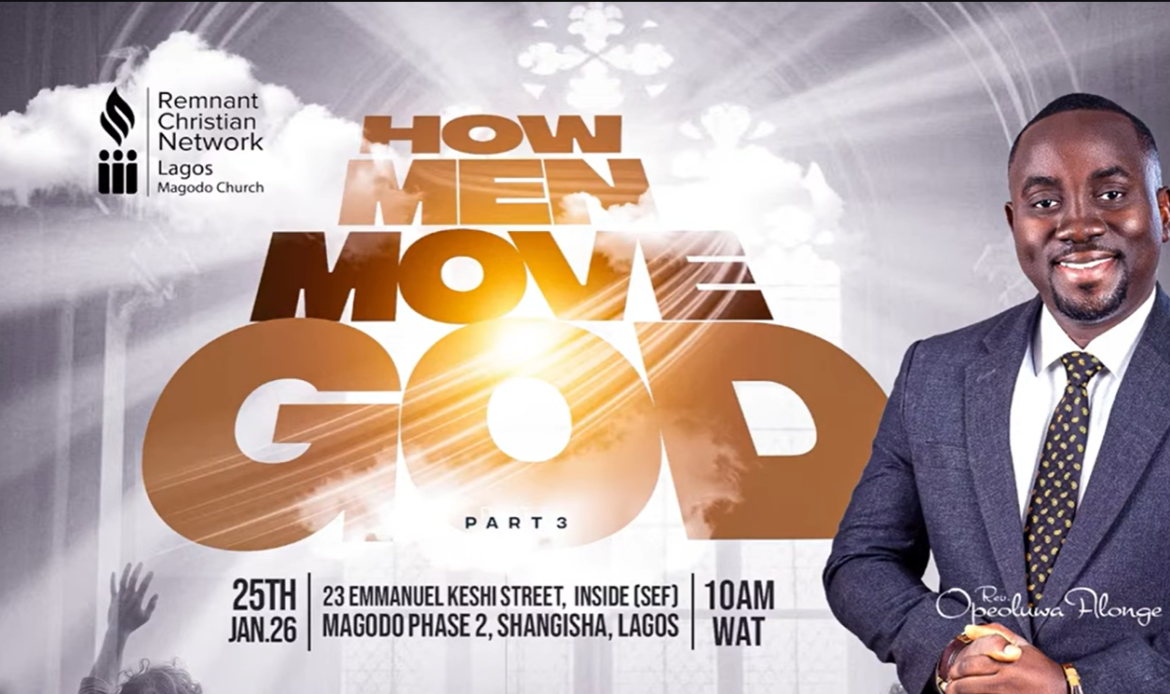
In this series, we have examined how men move God through intimacy and faith. This week, we explored the third key: sacrifice.
Before addressing sacrifice, a question from last Sunday helped clarify an important foundation. Moses’ preservation as a child was not a product of his intimacy with God but of God’s sovereign act. Scripture reminds us that God does as He pleases and takes counsel from no one (Psalm 115:3; 135:6–7). Every life exists because God chose it. Even the smallest alteration in the circumstances of a person’s birth could have meant they never existed.
However, while sovereignty is God’s responsibility, intimacy is man’s response. Saul was chosen, yet he failed to cultivate intimacy with God. Moses was chosen, but his usefulness came from his response to God’s choice. No one moves God merely by being selected; intimacy must be pursued.
From intimacy and faith, the teaching progressed to sacrifice. Sacrifice has the capacity to alter what has been ordained. While certain events are scheduled within God’s timing, sacrifice can provoke divine intervention.
Sacrifice is the language and food of the spirit (John 4:24). What is offered to God in the spirit must first die. That death may not be literal; it could be the denial of comfort, convenience, pleasure, or habit. Staying awake to pray when the body demands rest, stepping away from addictive patterns, or withdrawing from distractions — these are sacrifices because they cost something.
Men who carry weight in the spirit are often men of denial. Sacrifice builds spiritual mileage. Authority in the spirit realm is not loudness; it is weight. When a man speaks from a life of sacrifice, heaven responds.
Sacrifice must not be reserved for emergencies. It is not in the day of need that altars are built. A life of sacrifice prepares the altar long before the crisis arrives, ensuring that heaven recognises the voice that calls.
Scripture provides powerful examples. Noah’s sacrifice provoked God to make a covenant never again to destroy the earth by flood (Genesis 8:20–22). In contrast, a king in desperation offered his heir as a sacrifice in battle, stirring the spirit realm with tragic consequences (2 Kings 3:26–27). These examples reveal that sacrifice is a valid tender in the spirit realm, whether used rightly or wrongly.
Ultimately, the highest form of sacrifice is not an offering but the offering of self. Believers are called to present their bodies as living sacrifices (Romans 12:1). God cannot be served conveniently. Revelation without sacrifice produces little power.
Many battles persist year after year because the altar of sacrifice is weak. Before offering material things, a believer must first give themselves. A surrendered life remains the most potent sacrifice that moves God.