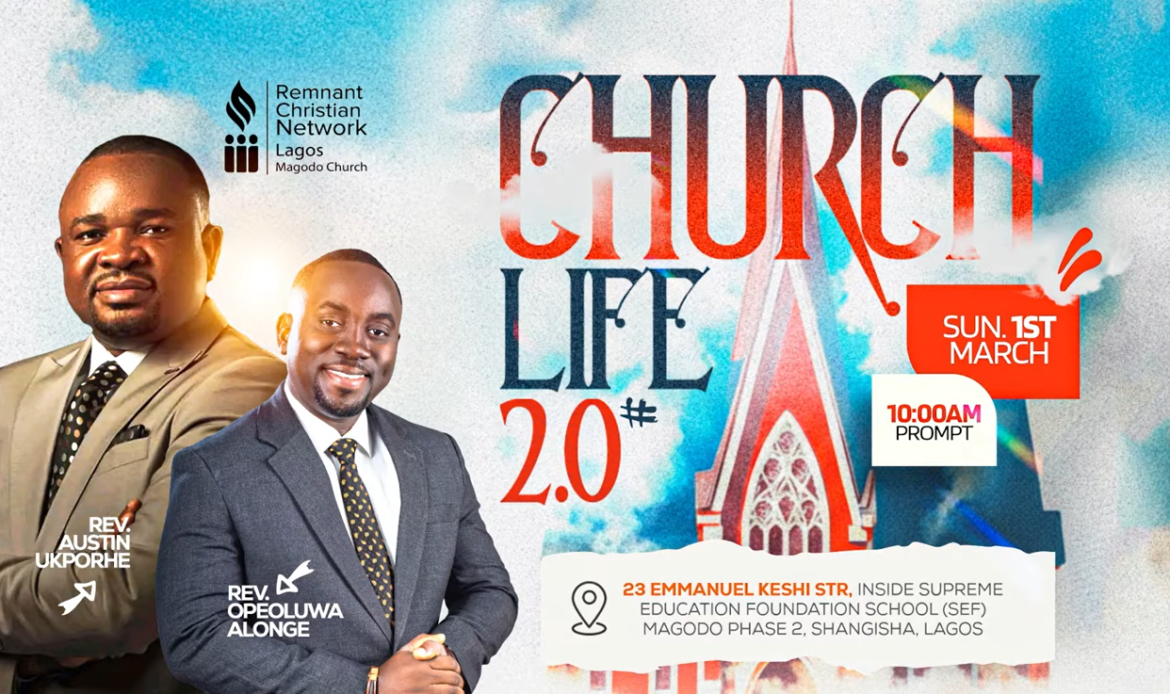
What is church life?
Is it attendance? Is it structure? Is it programmes?
In this week’s teaching, Rev. Austin reintroduced us to the biblical blueprint of church life — not as an event, but as a living system.
The early church in Acts 2:41–45 gives us the pattern: doctrine, fellowship, breaking of bread, and prayer. Their unity was Spirit-empowered. They were together in one accord, pursuing a shared goal.
The church is territorial. It carries presence. It has government and structure. But it is not project-driven — it is people-driven. The merchandise of the church is the life of Christ.
Calling itself must pass through appraisal — personal conviction, congregational confirmation, and divine endorsement (Acts 13). Church life is never isolated; it is communal.
Rev. Austin outlined seven pillars that define healthy church life:
Revelation-Based
(Ephesians 1:22-23; Matthew 16:18)
The church stands on the revelation of Christ. Without revelation, church becomes mechanical. Members must understand who Christ is, who they are in Him, and who their pastors are spiritually. Relationship must be discerned in the Spirit, not reduced to personality preference.
Love-Based
(1 Corinthians 13)
Love is the atmosphere of church life. It is patient, kind, and not easily provoked. The church must be a safe place where vulnerability is met with compassion, not condemnation.
Faith-Based
Our fellowship is sustained by faith. We gather because we believe. We serve because we trust. Nothing in this Kingdom operates outside faith.
Relationship-Based
(1 Corinthians 12:12-14; Romans 12:4)
The church is one body with many members. Each part is necessary. Healthy church life requires real relationships, not spiritual isolation. Faithfulness must be valued above mere gifting or wealth.
Accountability-Based
Church life without accountability leads to disorder. Accountability is mutual. Leaders and members help one another remain aligned with truth. Spiritual order exists for protection and growth.
Trust-Based
(Acts 2:44)
Trust allowed the early believers to share freely. Where trust is absent, unity fractures. Church life must intentionally cultivate integrity and confidence.
Giving-Based
Church life is both giving and receiving. We do not build projects at the expense of people; we strengthen people first. When people flourish, the vision advances.
The Church Life 2.0 is not about upgrading systems.
It is about restoring responsibility.
The question remains:
Are we attending church – or living it?